Firearm-related violence crosses boundaries. City lines. County lines. Even international borders.
But too often, the actionable intelligence needed to stop it does not.
Forensic ballistic intelligence, those tiny, microscopic toolmarks left behind on fired bullets and cartridge cases, can reveal critical connections between shootings, suspects, and jurisdictions. But those clues only matter if agencies can see them, share them, and make good use of them before another shot is fired.
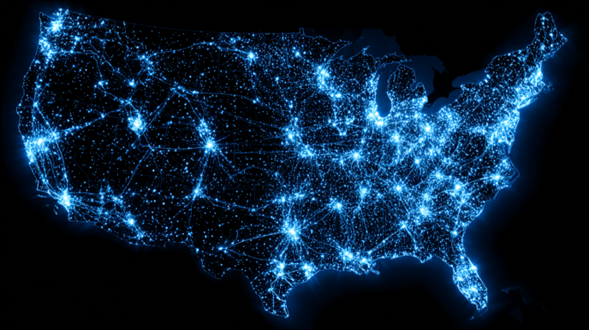
Ballistic information-sharing networks help close the gaps that geography and bureaucracy create. They can connect evidence across wide distances, transforming isolated clues into actionable intelligence. These networks give investigators the reach, speed, and clarity to outpace the operational demands posed by today’s highly mobile violent offenders.
And they reflect the same philosophy that drives everything we do at LeadsOnline: remove blind spots, accelerate insight, and help agencies solve more cases…faster.
Let’s break down how these networks do it.
Technology That Transcends Geographic Barriers
Every crime gun has a history. But that history rarely unfolds in one place.
The Integrated Ballistics Identification System (IBIS) captures the unique “ballistic fingerprint” a crime gun imprints on fired cartridge casings. When that data is shared across connected agencies, investigators can follow a crime gun’s trail, not just down the street, but across an entire region or even the globe.
NIBIN: The Nation’s Ballistic Intelligence Backbone
Powered by IBIS, the National Integrated Ballistics Information Network (NIBIN) connects federal, state, and local agencies across the United States. A fired cartridge case entered in one jurisdiction can match a shooting in another, hours later, not months.
This kind of speed is how serial shooters can be identified before they strike again.
It’s how investigative patterns become visible instead of getting lost in disconnected reports. It’s how cases once thought unrelated suddenly converge into a single, solvable narrative.
IBIN: When Crime Crosses Borders, Intelligence Follows
INTERPOL’s Ballistic Information Network (IBIN) connects it’s IBIN participating country members through a single global hub. When ballistic evidence from Portugal matched shootings in Spain, investigators were able to reveal a mobile organized crime group operating across national borders, something no single country could have uncovered alone.
IBIN proves a simple truth: when guns move, intelligence must move faster.
Regional Protocols: Eliminating Dead Ends
Gun-related violence isn’t local, it’s regional. And unless evidence moves as fast and freely as the criminals who race along those same highways and byways, critical leads will die on the vine.
Regional crime gun protocols ensure ballistic evidence doesn’t sit unnoticed in a property room while investigators elsewhere are searching for answers. These shared workflows ensure that evidence flows quickly and consistently across jurisdictional boundaries. Because a clue withheld, even unintentionally, is a clue lost.
Integration That Cuts Through Organizational Silos
Technology solves part of the problem. But organizational silos, inefficient and inconsistent processes can create formidable barriers.
Effective gun violence reduction programs require integration across multiple forms of intelligence collection and analysis. That means pulling together ballistic evidence, firearm tracing results, DNA and fingerprint matches, digital or video evidence, property and transaction histories, and cross-jurisdictional investigative intelligence. When these streams connect, the story they tell becomes sharper, stronger, and more actionable.
Faster Evidence, Faster Answers
For decades, slow ballistic evidence submission and processing times have limited the impact of realizing the value of ballistic intelligence. Ballistic evidence - crime guns and fired evidence - in some jurisdictions would sit on evidence room shelves for months. In that time, leads went cold. So, the faster the evidence moves, the faster the answers come.
Modern innovations have transformed that reality.
- Introduction of IBIS ClearCase™, a technology that dramatically reduces the time needed to compare ballistic evidence, turning days of manual review into hours of automated processing.
- Walk-In Wednesday-style programs, like the one originated in Los Angeles, allow investigators to bypass administrative delays and take evidence directly to the lab for immediate entry and analysis.
- FastTRAX-style decentralization programs, like that one introduced in Virginia, shifts test-firing and image capture to trained non-forensic personnel, relieving pressure on overburdened labs and preventing backlogs.
What once took weeks now takes hours. This is no longer forensic hindsight; it is operational foresight.
Policies That Make Intelligence Routine, Not Optional
MOUs, SOPs, and formal directives ensure that ballistic intelligence is not used sporadically or at the discretion of individual personnel but instead becomes a standardized and reliable part of every investigation.
ATF’s NIBIN MOU spells out the roles, responsibilities, and data-sharing expectations for all partner agencies, creating a consistent framework for how ballistic evidence should be handled. Internal SOPs build on this foundation by reinforcing the presumptive approach: every gun and every casing should be submitted for analysis, every time.
When agencies pick and choose what to submit, they also pick and choose which leads they will see. And selective insight inevitably results in missed opportunities to identify shooters, prevent additional violence, and solve cases that matter to communities.
A Digital Bridge That Connects What Matters Most
Ballistic information-sharing networks do more than store evidence. They connect impacted communities. They connect cases. They connect investigators to the truth.
When agencies participate fully, these networks help them spot patterns that would otherwise remain invisible, revealing serial shootings and repeat offenders who might operate across multiple jurisdictions. They link incidents that appear unrelated on the surface, uncovering deeper connections that change the trajectory of an investigation. They help identify violent offenders earlier in the cycle, reducing the risk of additional harm. They interrupt retaliatory violence by showing investigators the full picture before tensions escalate. And they help agencies solve cases before they grow cold, bringing justice to victims and resolution to families.
It’s not just about data. It’s about justice, for victims, for families, and for the neighborhoods caught in the crossfire.
This is the promise of ballistic intelligence: insight born from the pull of trigger.
Why This Matters, and Why We Care
At LeadsOnline, we believe that technology should break down walls, not build them. Our mission is to help agencies follow the life cycle of a gun, from purchase to possession to recovery, and uncover the people and patterns behind criminal activity.
Ballistic networks amplify that mission.
Whether it’s multi-jurisdictional property transactions, crime gun recovery intelligence, integrated investigative data, or tools that help agencies track the movement and misuse of guns, we create solutions that give investigators the information they need, when they need it most.
As ballistic information-sharing networks evolve, LeadsOnline will remain a committed partner, helping agencies modernize workflows, eliminate blind spots, and build a comprehensive intelligence picture capable of reducing violence and strengthening community trust.
Because at the end of the day, this isn’t just about systems. It’s about people.
It’s about promises. It’s about delivering justice, one connection at a time.